This article was written on 22 April 2026
and is a 5 minute read
We love Devon and hope you do too! So we thought we would tell you some fascinating facts about the county.
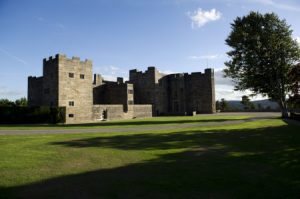
Devon is home to Castle Drogo, the last castle to be built in Britain. This 20th century castle overlooks the Teign Gorge. There’s not just a castle to explore but also gardens and wildlife-rich riverside walks to discover.
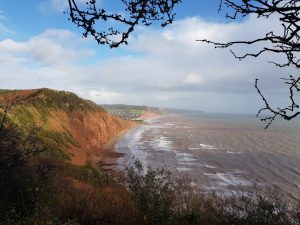
Devon is the only English county with two separate coastlines. The county’s coastline features two very different sides: the rugged, surf-heavy North Devon coast with high cliffs (Saunton Sands, Woolacombe), and the gentler South Devon coast, with it’s sandy coves, estuaries, and the fossil-rich Jurassic Coast.
Both are easily accessible from Forest Glade. Plan a day trip to North Devon or have a beach day at Exmouth, Sidmouth or one of the other beaches along the Jurassic Coast. There are lots to choose from and each is unique.

And two UNESCO World Heritage Sites! Get out and about and explore. There is so much to see:
Dartmoor National Park – home to ponies, distinctive granite tors, wide open moorland, deep river valleys, a rich history and rare wildlife. Whatever your interests spend a day out on Dartmoor.
Exmoor National Park – the smaller of the two National Parks Exmoor has sea cliffs, deep valleys, open moorland, tumbling streams and deep valleys. If you are lucky you might catch a glimpse of wild red deer and there are villages full of character and charm to explore.
National Landscapes, formally AONBs, are unique areas of Britain that have been designated in recognition of their national importance. Forest Glade sits on the Blackdown Hills, a unique landscape shaped by its geology, nature and human occupation. Bordering the Blackdown Hills is the East Devon National Landscape, home to rolling hills, dramatic cliffs and important heathland habitats. Other distinctive areas to explore are the North Devon National Landscape, the South Devon National Landscape and the Tamar Valley.
UNESCO World Heritage Sites are areas and landmarks with legal protection under an international treaty. Not far from Forest Glade is the Jurassic coast, one of these areas considered to be of “outstanding value to humanity”. Each time you visit the East Devon or Dorset coast from Forest Glade you will be on the Jurassic Coast. The Cornwall and West Devon Mining Landscape is a day trip out from the park and an interesting landscape to explore.

Exeter is not only home to the narrowest street in the world, Heavitree in Exeter witnessed the last executions for witchcraft in England. From it’s cathedral, to well-preserved Roman walls, its free-to-visit museum, great shops and many restaurants and cafes, we recommend you include a trip to Exeter on your list of things to do when staying at Forest Glade. There’s plenty to do there when the weather is wet too.

A La Ronde, now owned and run by the National Trust, sits above the Exe Estuary and is filled with curious momentoes from the Grand Tour travels of its owners, cousins Jane and Mary Parminter.

Agatha Christie, Michael Morpurgo, Sir Arthur Conan Doyle – Devon has inspired many famous writers.
Agatha Christie was from Torquay and many of her novels were based around the area. You can visit her holiday home at Greenway, near Brixham. The seaside town of Sidmouth has been used as a location for several films based on her books.
Michael Morpurgo, author of War House, and many children’s books, is said to have been inspired to write the book which became a film whilst having a drink at a country pub in Iddesleigh. You can visit War Horse Valley – Parsonage Farm near Iddesleigh, where War Horse was set, farmed by the same family for nearly 100 years.
Sir Arthur Conan Doyle, the creator of Sherlock Holmes, the famous detective, set one of his novels, the Hound of the Baskervilles, on Dartmoor.
J K Rowling used several locations in Devon in her Harry Potter books, including Exeter Cathedral, Ilfracombe and Ottery St. Mary (Ottery St. Catchpole).
Devon is home to the oldest cinema in Europe. The Paignton Picture House, currently undergoing restoration, was built in 1914 and was where Agatha Christie regularly watched films.
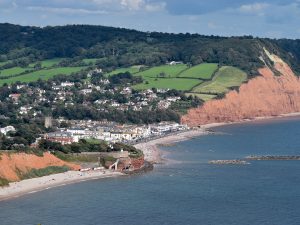
A visit to South Devon is a great day out from the park.

Devon invented the pasty! The earliest recorded pasty recipe dates back 500 years in a Devon recipe book. The earliest reference for a pasty in Devon or Cornwall can be found in Plymouth city records of 1509/10. The traditional contents of a pasty form a complete meal – meat, vegetables and potatoes, and they were popular with working people such as the tin miners of West Devon and Cornwall.
We sell freshly baked pasties in the shop, both traditional and more modern fillings.

Devon is also home to the cream tea which you must have when you are on holiday. Cream teas are available to order from the shop and there are also excellent local tea rooms and cafes nearby where you can treat yourselves. Remember that the scones should be plain, the jam strawberry and the cream always goes on first!

The green, white and black Devon flag features green for the county’s hills, black for the moors of Dartmoor and Exmoor, and white for the sea spray and is dedicated to St. Petroc.
